


A few years ago, if you told a serious runner that a shoe from a brand they'd never heard of something with a name like Dynafish or Li-Ning was about to end up in their rotation, they'd have laughed you out of the run club. Chinese sportswear was a punchline. Now it's a problem for Nike and Adidas, and not a small one.
Here's what changed, China's domestic running boom created a market big enough and competitive enough that brands like Li-Ning, Anta, Xtep, 361°, and a wave of newcomers had to get genuinely good, fast. They had elite Chinese marathoners to chase, government fitness tests to engineer for, and a home crowd that stopped being loyal just because a shoe had a swoosh on it. The result is a crop of super trainers and carbon racers that go toe to toe with anything coming out of Beaverton or Herzogenaurach usually for 30-50% less money.
I've spent the last few months going through what's out on the road right now, cross referencing it with what testers, physical therapists, and everyday runners are saying after real miles. Here are six shoes that are making Western runners double take.
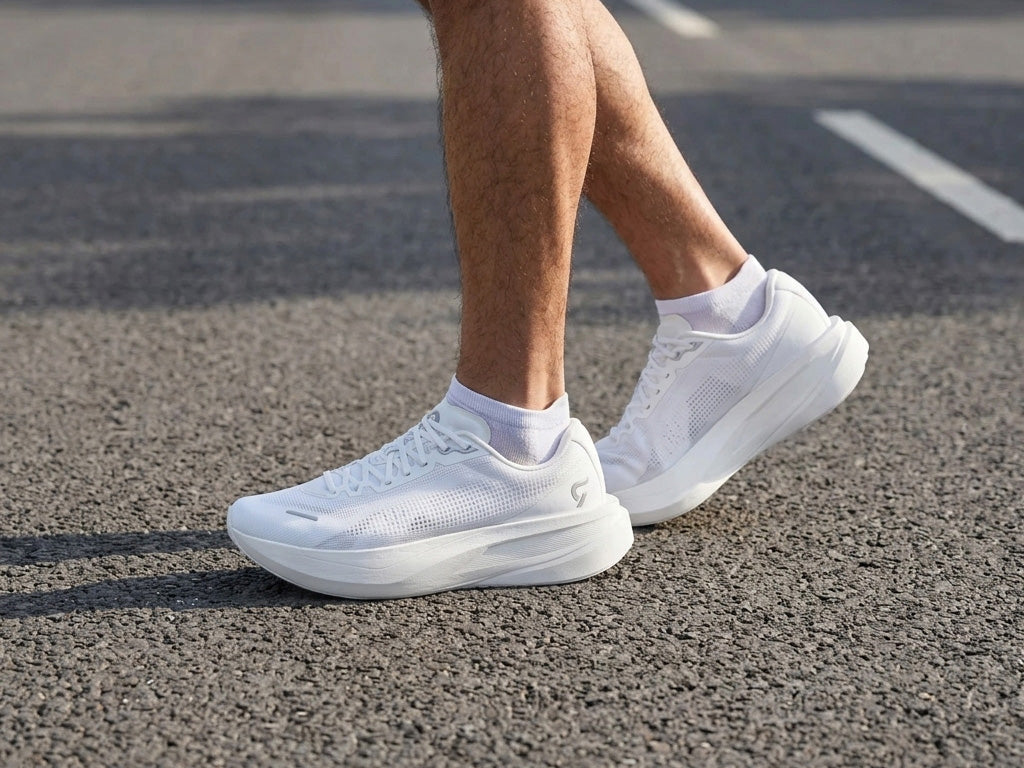
1. Dynafish Xiaonian
Dynafish is a newer name, and the Xiaonian is basically the only shoe they make right now which tells you something. The brand started out building a racer for China's compulsory school fitness tests (the 800m/1000m timed run that actually affects your grades over there), so speed was baked into the DNA from day one before they ever tried to compete on the daily trainer stage.

What surprised testers wasn't a gimmick it was the weight. Coming in around 202-206 grams in a men's size 10.5, it's lighter than a lot of actual carbon race shoes, yet it's stacked with 34mm of foam up front and 41mm in the heel. That's max trainer cushioning in a shoe that feels like a racing flat on your foot. The unplated TPEE midsole has drawn comparisons to Lightstrike Pro, and testers who've put over 100 miles on it have called it out as one of the better values in the entire super trainer category, sitting well below the $190-250 that Nike and Adidas charge for comparable stack heights.
It's not perfect. Multiple reviewers flag that it runs small go up half a size and the fit narrows through the midfoot. The stock laces are also a common complaint, most people swap them out as they are quite long. But as a lightweight daily trainer that can flex into speed work, it's become one of the most talked about shoes to come out of China in years, and one reviewer even named it their brand's newcomer of the year.

2. Li-Ning Red Hare 9 Ultra
This is the shoe people describe as "fun" before they describe it as anything else, and that's rare in a category obsessed with marathon times. Li-Ning built the Red Hare 9 Ultra around a three layer midsole, a soft race foam top layer, a pressure wrapped foam "Super Boom Capsule" in the middle that stores and releases energy, and a beaded PEBA base layer for structure. Nothing about that setup is playing it safe.

At 46mm of heel stack and roughly 260 grams, it's genuinely one of the bounciest trainers reviewers have tested this year several put it up against the Nike Vomero Premium and came away saying the Li-Ning felt livelier underfoot despite less total foam. One long term tester with 63 miles on the shoe praised how organically the outsole worked with the midsole rather than fighting it, and found the true to size fit and generous toe box a pleasant surprise after hearing Li-Ning runs small.
The catch is stability. This is a shoe that rewards a clean stride and punishes a sloppy one it's frequently paired with more planted options like the Superblast 3 for runners who want bounce without the wobble. If you're chasing a fun, high cushion long run shoe and don't need a ton of guardrails, though, this is one of the most interesting releases in the category, full stop.

3. Anta C202 7
Anta doesn't get talked about enough in the West, and that's wild considering they're the largest sportswear company in China and sit just behind Nike and Adidas globally with a controlling stake in Puma to boot. The C202 7 is their answer to the budget carbon racer question, full length carbon plate, performance cushioning, breathable mesh upper, all landing around $179.

Testers who've logged 50+ miles on the C202 7, including long runs up to 15 miles, describe it as a legitimate gateway into carbon racing tech rather than a watered down imitation. It handles varied paces, tempo, progression runs, even track work without falling apart, and the durability holds up better than you'd expect from a carbon plate at this price. One reviewer straight up asked whether the shoe could compete with the Vaporfly and came away impressed enough to keep asking the question seriously.
It won't replace a $250 elite racer for someone chasing a Boston qualifier, but for the overwhelming majority of runners who train two or three times a week and want to feel what a carbon plate actually does, the C202 7 removes the price barrier that's kept this tech out of reach for years.

4. Xtep 160X
The 160X series is the one with the pedigree. This shoe was on the feet of Dong Guojian for the second fastest marathon ever run by a Chinese athlete, and it's been through more iterations than almost anything else on this list each one chasing a slightly different balance of stiffness, stack, and stability.

Early versions leaned narrow and low to the ground, which testers loved for pure speed but found a little too flexible for a plated shoe some wanted a stiffer plate to match the softer midsole. Later Pro versions dialed in a bigger stack and a chalice shaped plate that wraps the foot for a more guided ride, and testers found it held up remarkably well over 30+ hard miles with barely a mark on the outsole. The more recent 6.0 Pro pushed further with a redesigned, more flexible plate that still snaps back at faster paces, plus a monolithic foam process built for consistency.
If you want one takeaway: the 160X lineup is Xtep's proof that they belong in the "great plate race" conversation, and depending on which generation you land on, it can serve as anything from a 5K to half racer to a genuine marathon day shoe.
5. Li-Ning Feidian 6 Elite
If the Red Hare is Li-Ning's fun shoe, the Feidian 6 Elite is their serious one. It's built to go head to head with the Alphafly and Endorphin Elite 2, using that same Super Boom Capsule tech from the Red Hare but paired with a full length, dual bow carbon plate designed for explosive push off.

Testers found the ride "pleasantly familiar" if you've spent time in top tier Western racers, describing it as extremely bouncy, smooth, and floaty across a wide range of paces, warm up jogs, race pace efforts, and cool downs all felt good in it, which is unusual for a shoe this aggressive. One runner doing pyramid intervals at sub 4 minute kilometer pace called the midsole the standout feature, noting strong forward propulsion through pace changes.
The fit is the sticking point. More than one reviewer flagged a sloppy step in feel and a narrow midfoot that can create pressure on the metatarsals, and stability dips on uneven ground or late in a race when form breaks down. Li-Ning also sells this in three tiers Challenger, Ultra, and Elite so if the flagship's price feels steep, there's a cheaper way into the same platform.
6. 361° Flame
361° took a different route than everyone else on this list, instead of chasing the lightest or bounciest ride, they built the most stable budget super shoe on the market. The original Flame launched as an affordable alternative to the Endorphin Pro and Alphafly, and testers noted it was firm enough to feel almost "too rigid" at times but that rigidity is exactly what's made later versions so good.

By the Flame 4 and Flame 5, 361° had widened the base, added a large central cutout, and shaped the plate to wrap the foot for extra guidance testers landed on calling it one of the most stable racing shoes they'd tested, describing noticeable support through the midfoot and forefoot without turning the ride mushy. Durability is consistently praised too, with testers reporting an outsole that looked brand new after 40 miles. The tradeoff is that it doesn't come alive until you pick up the pace; several reviewers found it a bit awkward on easy jogs and best saved for tempo and race pace efforts.
For runners with wider feet, or anyone who's been burned by an unstable carbon plate before, the Flame is one of the few options in this price range built specifically to solve that problem.
The Bigger Picture
None of these shoes are chasing hype for its own sake they're each solving a real problem that Nike and Adidas have been slower to address such as price, fit for different foot shapes, or just making advanced foam and plate tech available to runners who aren't training for the Olympics. That's exactly how you take market share from an incumbent, and it's why more of these names are showing up in run club conversations, on Reddit gear threads, and now in official US storefronts.
Worth trying any of these? If you've never run in anything from Li-Ning, Anta, Xtep, 361°, or Dynafish, this is a good year to start. Just pay attention to sizing nearly every shoe on this list runs differently than its Western equivalent and treat the first few runs as a fit check before you commit to it as your go to.
FAQ
Are Chinese running shoes actually as good as Nike or Adidas? For most runners, yes. Brands like Li-Ning, Anta, Dynafish and Xtep are now using the same categories of tech with carbon plates, PEBA and supercritical foams as the big Western brands, and in several cases (like the Anta C202 7's price versus a Vaporfly) they're delivering it at a much lower cost. Elite marathoners in China are already racing in them, which says a lot.
Do Chinese running shoes run true to size? Not consistently, and this is the biggest complaint across nearly every shoe on this list. Several, including the Dynafish Xiaonian and Li-Ning models, tend to run small or narrow through the midfoot. The safest move is to size up half a size on your first pair and check width if you have wider feet.
Where can I buy these shoes in the US or UK? At TrackSpikes.co stock most of the models mentioned here, going direct to the manufactures for the others is a good start.
Which one is best for a beginner? The Dynafish and Li-Ning Red Hare 9 Ultra are the most forgiving starting points both are more affordable and versatile than a dedicated race day shoe. If you're brand new to carbon plates specifically, the Dynafish is a low risk way to try the tech.
Which one is best for marathon racing? The Xtep 160X and Li-Ning Feidian 6 Elite are the two built specifically for race day, with high stack heights and aggressive carbon plates designed for sustained speed over 26.2 miles. The 361° Flame is a strong pick if stability matters more to you than outright speed.

About the author
Peter M
Drawing on years of experience, he’s building a new track spike brand focused on performance, innovation, and elevating athletes through thoughtful design and community impact.
1 comment
Rajen̈dra pawar
Interested.how to place orders.
Interested.how to place orders.